
Buildability
A structural design may work on paper and still be awkward to manufacture, transport and install. Early input from Steel Structures can identify whether the proposed sections are readily available from stockholders, or whether a size can only be obtained from a mill rolling with a long lead time.
It can also show whether a complicated detail could be simplified without compromising the engineer's design intent, whether lifting or handling is restricted, and whether the arrangement creates unnecessary complexity or cost.
A complex roof might be drawn with several unusual connections and individual components. Early discussion may identify a more practical way to detail and manufacture them, subject to approval by the responsible structural engineer. The benefit is not necessarily a change to the structural design. It is a steelwork project that is more practical to deliver. Design coordination and pre-construction.
Connection design
Connections influence fabrication details, bolt arrangements, erection methods and how the frame meets other building elements. Early consideration helps establish what the connection designer needs from the structural engineer, whether the end reactions are available, how connections will be fabricated and bolted, and whether they clash with other steelwork or decking.
It also shows whether connection design and approval have enough time in the programme. At Steel Structures the in-house Tekla team works alongside the workshop, and connection design is coordinated as part of the project. If a connection will be difficult to reach once the frame is up, it is better found during detailing than on site.
The structural engineer remains responsible for the structural design within their appointment. Connection design follows the agreed design responsibilities. Tekla detailing and connection design.
Sequencing, access and programme
The order of erection affects programme, crane requirements, temporary stability and other trades. Early involvement helps the team consider fabrication and delivery phasing, temporary works, and how erection sits with metal decking, shear studs, concrete and follow-on trades. On a multi-building development, delivering all the steel at once can create storage and handling problems. A phased delivery, aligned with the erection sequence, is often more practical.
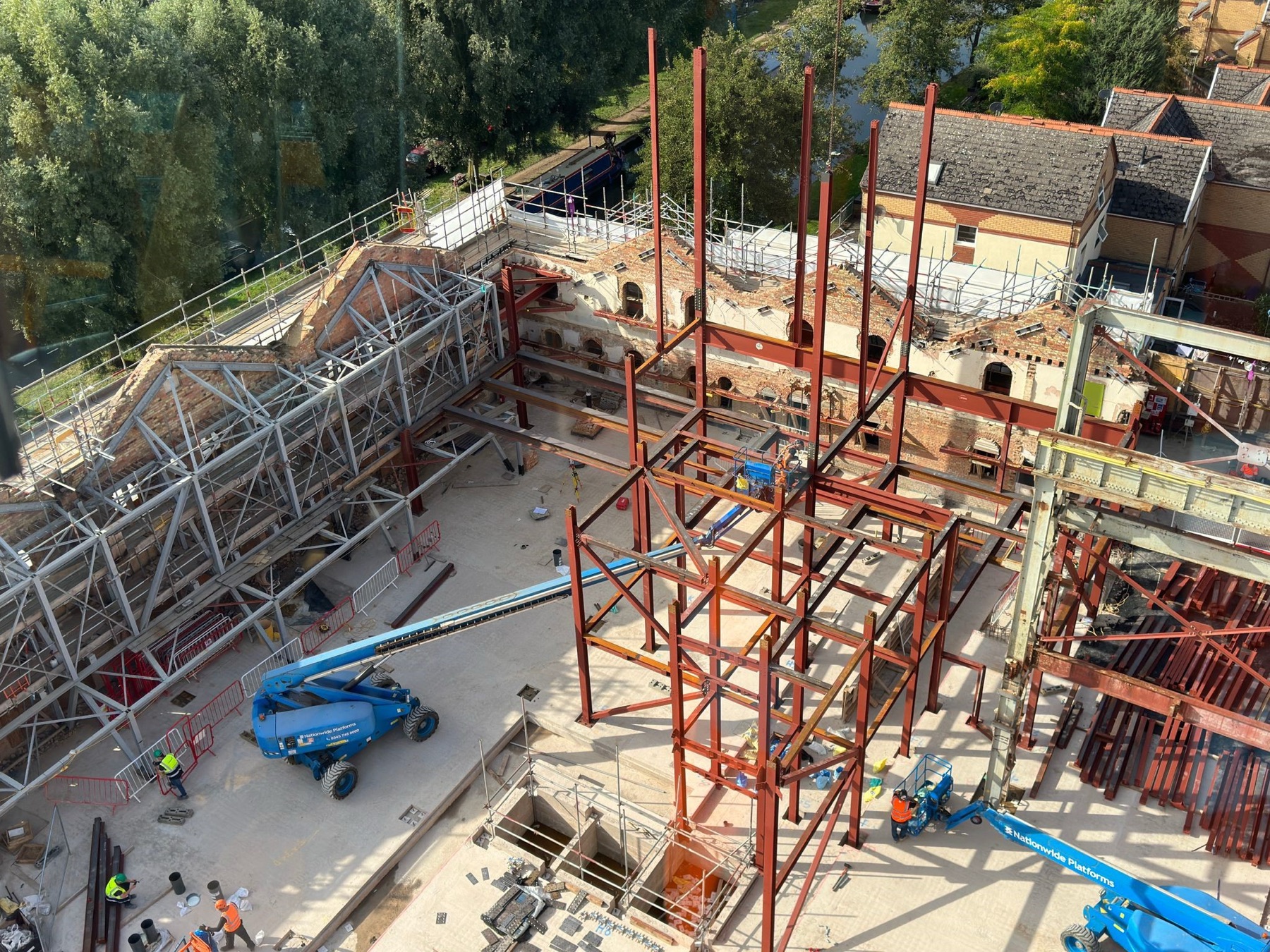
Access is often left late, especially on alterations and work inside existing buildings. The questions are whether vehicles and lifting equipment can reach the work, whether the slab can take the imposed loads of that equipment, whether pieces can pass through existing openings, and whether steel needs to be split for transport or installation. In a live factory, the lifting space may decide the size of the piece and the order of the work.
Steelwork depends on a chain: appointment, approved design information, connection design, drawing review, approval to fabricate, material procurement, manufacturing capacity, then phased delivery and installation. If steel is required in November, appointing the fabricator only a few weeks beforehand may leave too little time. Early involvement cannot guarantee a shorter programme, but it can show the real lead times while there is still room to adjust.